
Crime Sight Newly Released Action Mystery Game Concept Details and Developer Interview Summary
Crime Sight Newly Released Action Mystery Game Concept Details and Developer Interview Summary. Inspirations and new mystery analogue game.


The competitive deduction game “Crime Sight”, with a challenging system that allows players to enjoy the “most delicious part” of logic puzzles in 30 minutes, is finally released on Steam. In this article, we shed the light on it’s complex and unique systems, in addition to the most important points from the developer’s commentary on the release. Original article can be found here.
Crime Sight is a “battle of wits” in which players are divided into two groups, one to carry out crimes and the other to prevent them, in a simulation space that predicts “preordained heinous crimes” that are believed to occur in the future. The rules and development of the game vary depending on the number of players, such as one-on-one or three or more players in a collective multiplayer session.
Crime Sight - Breathtaking Mind Battles
The game takes place in London in the year 2075, a time when AI technology has greatly developed. The Foresight AI system, which collects a variety of information online and predicts future crimes, has been put to practical use, and many crimes can now be prevented before they happen.
Foresight AI reduced the rate of violent crimes by 90%, and the world seemed to be on the road to peace. However, the “remaining 10%” of crimes that even the Foresight AI cannot prevent are the cause, and the “Foresight AI itself” predicts a future in which the world is on the verge of destruction.
In order to break through this situation, an AI is developed to solve “preventable heinous crimes” that will cause the destruction of the world. Its name is Sherlock. AI Sherlock, named after a famous detective from a novel of the old century, arrives at a fact as he pursues a number of cases. At the center of these crimes that lead to his downfall is Moriarty, an AI named after a famous criminal from the same old novels as Sherlock.
Players will engage in a battle of wits in the simulation world with the support of either Sherlock, who prevents crimes, or Moriarty, who attempts to create them.
Crime Sight - Flow of the Battle
If the killer enters the same area as the target with the “murder weapon” and there are no other pawns in the room containing that area, an incident will automatically occur. The Sherlock’s side must prevent the incident from occurring and identify the killer, while the Moriarty’s side aims to kill the target by arranging the conditions for the incident to occur.
When there are two players, they are divided into Sherlock and Moriarty, and when there are three or more players, the rules change. For two player games, the battler occurs in a turn based manner by selecting pawns to move according to the respective player” decisions. There is a daily time limit, and its impossible to know which team has given instructions to which pawns. The key is to move pawns in such a way as to avoid narrowing down the target.

The killer also cannot kill unless he follows a certain group of conditions: The killer and the target must be in the same room, the killer must be in possession of the murder weapon, and there must be no witnesses other than the killer and the target. It’s not easy to maintain these conditions with strategies though, as pawns trapped in closed space would go hungry and die, their travel distance will be reduced, in addition to vision functionality.
The players has a task to analyze data in real time and act accordingly like a real mystery story. In the case of a larger group of players, one player will always take the role of Moriarty, and the others will take Sherlock’s side, but the players are not informed which of them is actually Moriarty, so it becomes a game of narrowing the suspect list. You can also use face icons to share deception or recognize hints, since there is no voice chat in this game.
Crime Sight’s deductive elements, such as the ability to narrow down information by assembling logical puzzles, and Pawns, which do not have different abilities, make the game feel very much like an analog board game. In addition, the AI Sherlock and Moriarty are able to take care of the parts of the game that are difficult to reproduce on the board, allowing the player to concentrate on the most delicious aspects of deduction and logic puzzles, which is a good combination of analog and digital.
The game takes only about 30 minutes to play, even in a multiplayer game, so it can be enjoyed over and over again. The turn-taking feature of the game is also very well suited for players who like to enjoy the elements of “deduction” and “deception” in games such as Werewolf and Among Us, and who also like to think carefully about each move. For those who play these games with friends and colleagues, it will be a long-lasting competitive tool.
Interview Tidbits from the developers
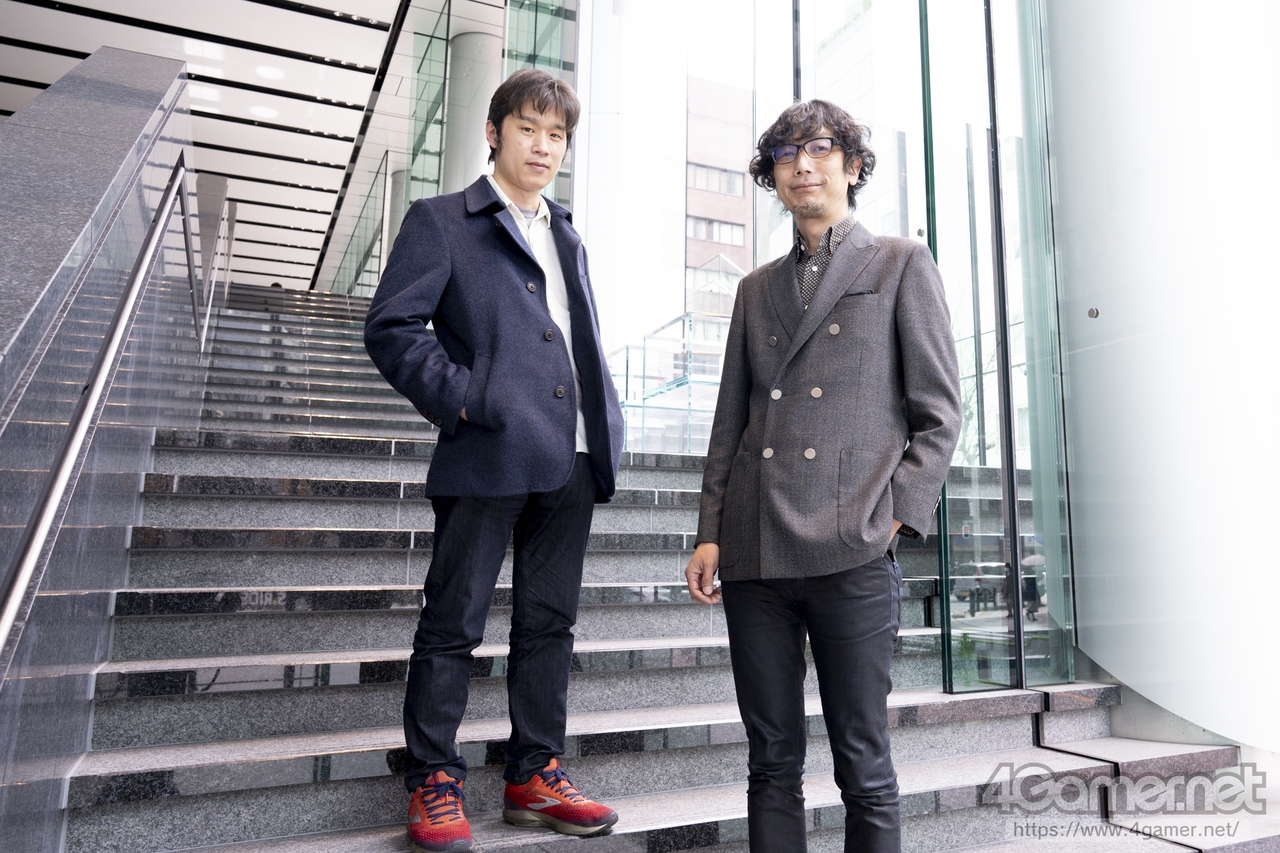
- Crime Sight was influenced by Analog games such as Cluedo and Tragedy Rooper.
- The game was built to connect to the global world without need for conversation and communication.
- The difference between this game and games like Among us and Project winter is the turn system, which allows you to think carefully about much more choices.
- The fun of the game is to accumulate the logic from the various ongoing steps and amalgamation of conditions.
- The design choices (Number of players, available options, etc…) were designed around intuitive thinking and the time limit of 30 minutes.
- Game balance was the core of the design philosophy of Crime Sight.
- The intention of not having text chat is to avoid handholding from experienced players. Simple expression of intention is the only goal, and players are only provided with “potential” hints of their actions, not concrete goals. The enjoyment comes from responding to these hints and possibilities. Even people who never played games can enjoy it because even if you think hard, translating your thoughts into actions is simple.
- The setting is inspired by how SF works name mechanisms and systems from classic nomenclature, and also the opposing sides of “Star wars.”
Related stories

Street Fighter 6 Interview Summary with 4gamer. New Visual Identity, Modern Control Schemes and New Competitive Worldview
A new interview with the director and producer of the new Street Fighter 6. New info on world view, direction and future hints

Schwarzesmarken: The hardcore shared world of Kouki Yoshimune and Hiroki Uchida Interview Translation (Part 1)
Schwarzesmarken interview with creators Kouki Yoshimune and Hiroki Uchida, discussing various details about the creation and worldview

Tales of Arise Character Designer Minoru Iwamoto 4gamer Interview Summary. Early Character Concepts and Animal Inspirations
Tales of Arise Character Designer Minoru Iwamoto 4gamer Interview Summary. Early Character Concepts and Animal Inspirations and more