Assassin's Creed: Rogue Review (PS3, Xbox 360)
This year Ubisoft has graced us with not one, but two Assassin's Creed games, one of which is the subject of this review, the other being Assassin's Creed: Unity.

This year Ubisoft has graced us with not one, but two Assassin’s Creed games, one of which is the subject of this review, the other being Assassin’s Creed: Unity.
It seemed a strange move by Ubisoft to release two games on the same day for differing generations of consoles, but the more I played through Assassin’s Creed: Rogue, the more I warmed to the idea and eventually managed to shake away the feeling that I’m being fed a second glass of milk from the same cow.
Read on for the full Assassin’s Creed: Rogue review.
Story
For the first time in the series we’re playing on the other side of the fence, though it’s really a second time if you count Assassin’s Creed III’s Haytham Kenway sections, but it’s the first Assassin’s Creed to place you within the Templar order for the majority of the game. An interesting story plot or just a gimmick to lure players in?
Thankfully it’s the former and Shay Cormac’s tale is told splendidly, albeit with a few misgivings here and there, though the story itself is fantastic and offers a real service to fans of the series, answering a few questions along the way.
If you’ve followed the series since it’s inception then you’ll have a pretty good idea as to what the timelines of the games are and you’ll also be painfully aware of how the series has gone back and forth since Assassin’s Creed III and Black Flag - Rogue doesn’t help the mind-bending timelines much either.
Shay’s story takes place between 1752 and 1761, concurrent to Assassin’s Creed III’s earlier chapters, even bringing back some beloved characters, not just from Assassin’s Creed III but also from Assassin’s Creed IV: Black Flag, so there’s a little bit of thinking required to work out just where you stand in history.
It’s not a bad thing though and each character brought back from the previous two games are a welcome addition to the already strong cast of characters that Rogue presents.
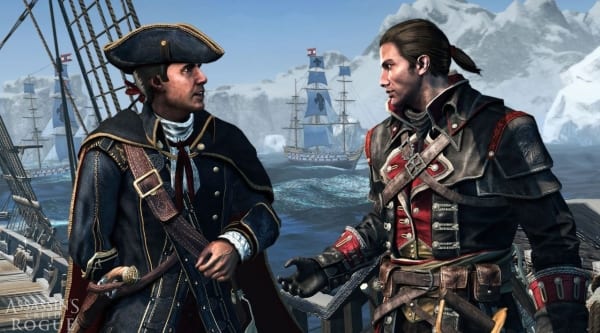
They’re not just throwaway characters either and they’re given adequate screen time to be fleshed out and become more than digital men who walk in and out of view. The re-introduction of certain characters isn’t just a novelty either, there’s a reason that Haytham Kenway and Achilles are brought back to life, though it’s not my place to spoil the tale for you, I’m only here to give you my impressions of the story. What I can say is that Kenway is just as dastardly yet charming whilst Achilles is a little, different.
In some respects Rogue’s story holds up with the best of them, even exceeding some and serves as a great companion to Unity. There’s a few secrets for you to find, which for me as a long time fan of the series was well received.
As a big fan of games with strong narratives I’ve come to associate the Assassin’s Creed with great story-telling, though Black Flag was a personal disappointment in terms of storytelling, Rogue has once again managed to capture my imagination and just as Assassin’s Creed III hooked me in and lead me to research the American Revolution, Assassin’s Creed: Rogue has got me pouring through history once more. Come to think of it, I’m pretty sure I’d have gotten a higher grade in my History A levels had Assassin’s Creed been released a few years sooner…
If you’ve an interest in the historical stories that unravel within the Assassin’s Creed universe then you’ll be pleased with what Rogue has on offer, especially if you’ve always wondered what came before Assassin’s Creed III and it’s characters, how they came to be and what preceded the events of Assassin’s Creed III and the next-gen exclusive Unity. I’ve said enough, if you really want to know the story of Shay’s journey then you’ll just have to plonk down the cash and buy the game.
Gameplay
So how does the gameplay hold up? It’s not the game changer that Assassin’s Creed: Unity promises to be, but we didn’t really expect that did we. We all knew that Rogue was more or less going to be a chop-shop job done on the cheap, but you’ll be fairly surprised at how well it plays out, despite being handled by Ubisoft Sofia, a studio usually handed the task of porting the console games to the PC platform.
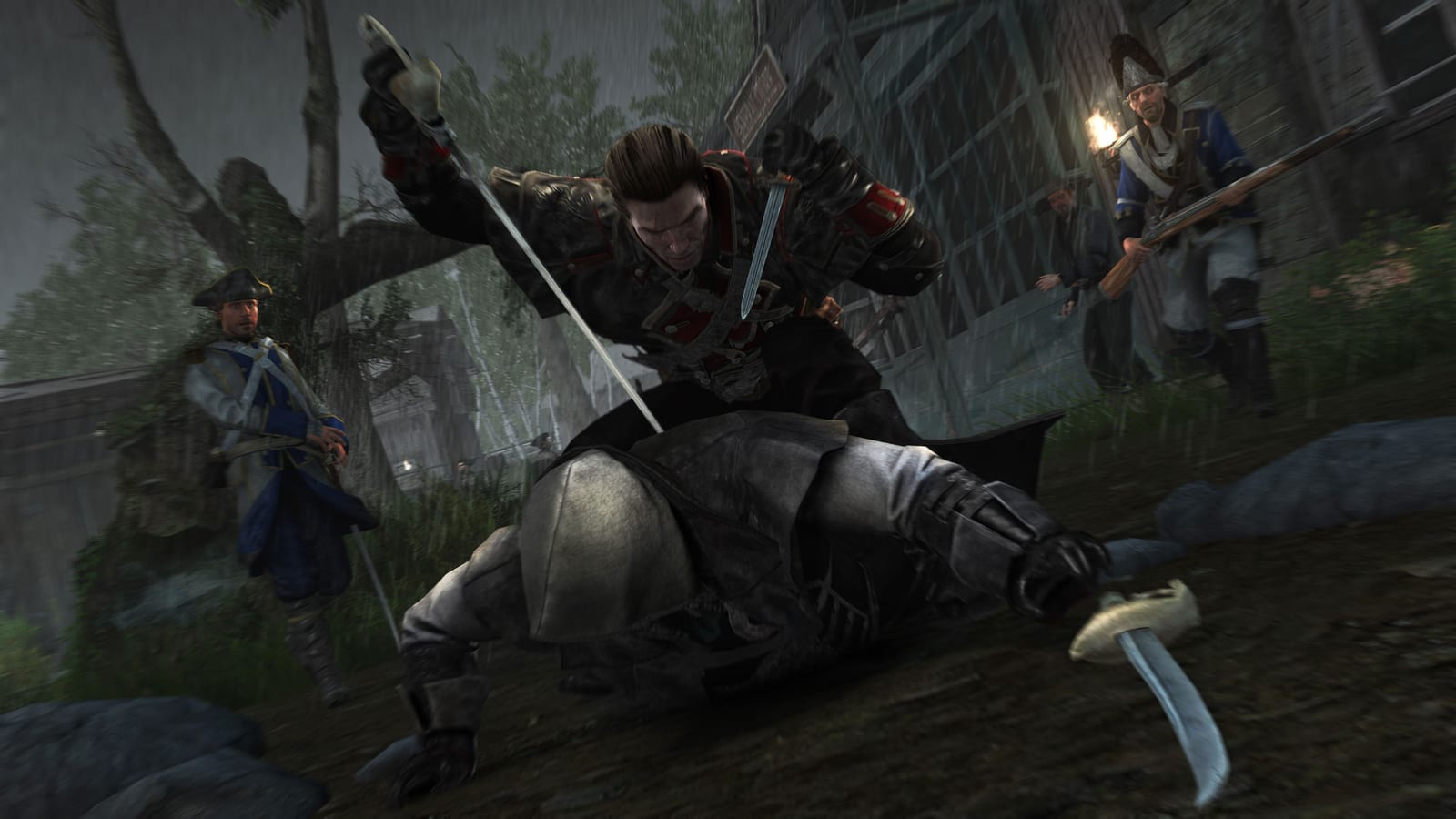
In a sense Rogue is a bit of a chop-shop job, but not in a bad way. If you played through Assassin’s Creed III and Black Flag then you’ll feel instantly at home with the control scheme, nothing has changed drastically and why should it? If it’s not broken, don’t fix it. Plus it was probably cheaper to continue using the same engine…
Features from the aforementioned titles are presented within Rogue; there’s naval combat, New York shows her cheeky face once again and there’s the now standard renovations for you to manage. I’ve always been a fan of the mini-management that first started in Brotherhood and the appeal of re-building Rome has left a lasting desire for Assassin’s Creed to let me turn a city from ruin into a metropolis. Alas, Rogue doesn’t manage it on the scale of Brotherhood, but it’s still a nifty feature that’s enjoyable for those who like to make sure they’ve got the revenue coming in on the regular. Upgrades don’t buy themselves you know…
As a Templar you’re gifted with a slight advantage over the Assassin’s, the people who were once you’re allies but are now you’re sworn enemies. Upgrades are plentiful and seeing as you now rub shoulders with the Templar crowd you’re afforded more in the way of weaponary and upgrades, the Templars really do have the best toys. Upgrading your vessel and kitting it out with the baddest cannons blood-money can buy is still as engaging as it was back in Black Flag, it’s just that you’re now doing it all under the guise of a Templar.
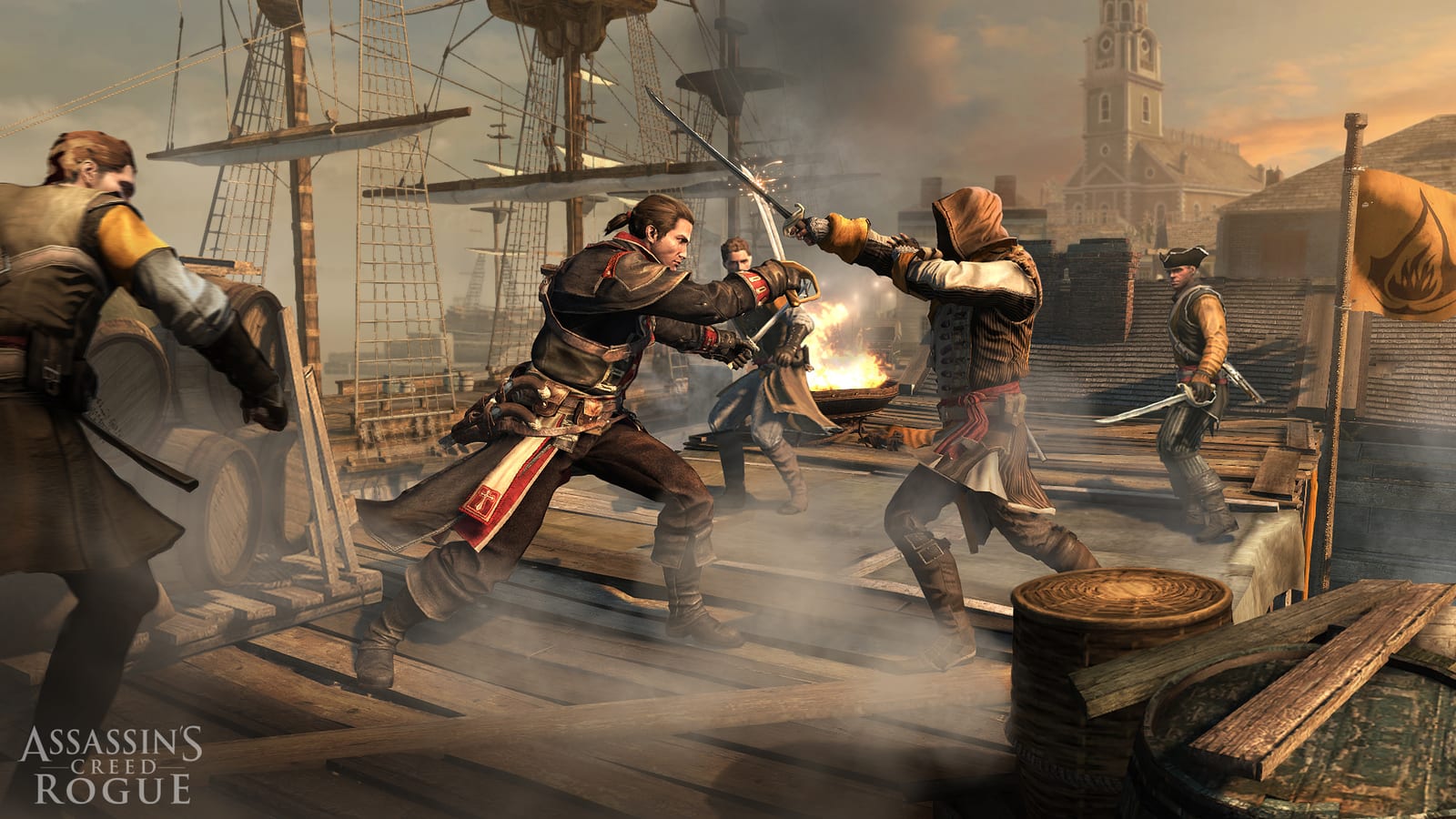
Shay’s turn to the ‘dark side,’ as it were, does seem a little rushed and once you’ve made the transition from Assassin to Templar, you’ll find that not much really changes in the way the game plays out. Of course the story is what gets an adrenaline boost by the turn of events, but gameplay wise you’re doing pretty much what you’ve been doing for the last five games, or the last two in terms of naval play.
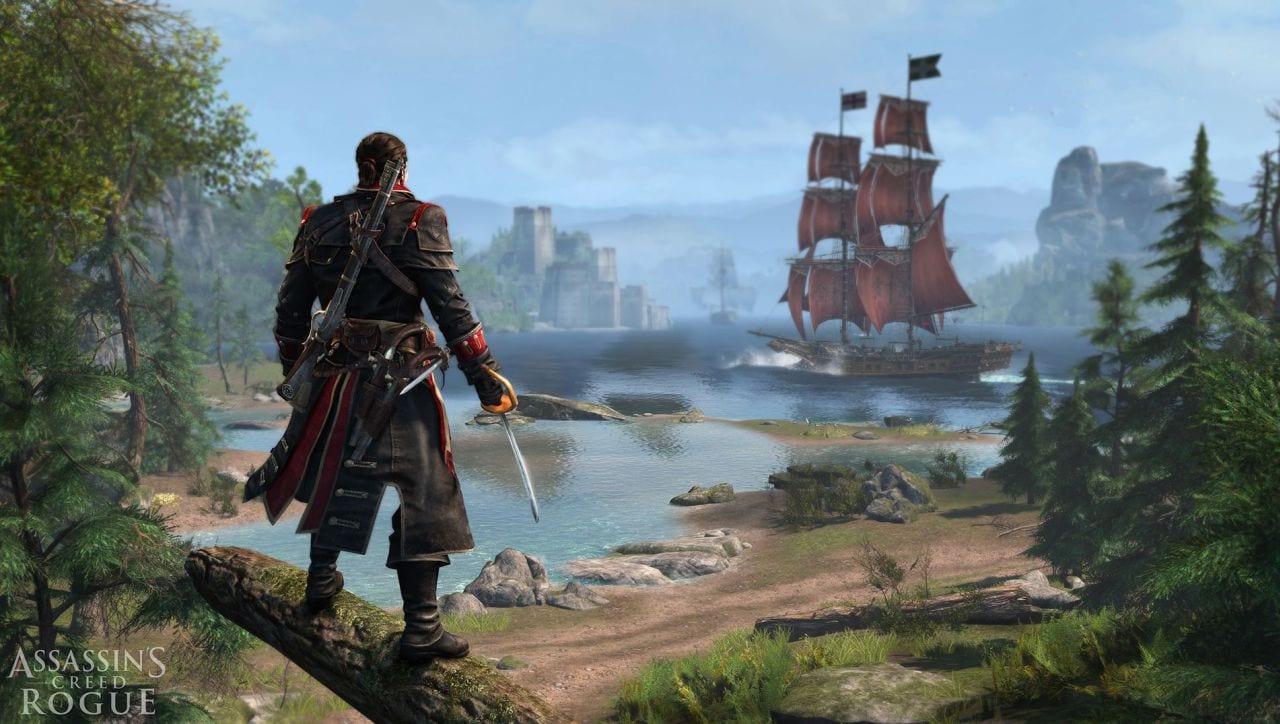
Once again naval combat is pushed to the forefront and expanded upon, though barely. Sailing the seas is still just as fun with combat getting a kick up the bum thanks to some new tactical options to consider. Where previous game literally just pitted you and your sea-faring opponents against each other with nothing but the wind to separate you, Rogue adds some tactics to the combat with floating islands providing cover from enemy fire. It’s not a huge addition but it does make the buccaneering exploits a little more challenging and induces some brain activity, rather than have you simply fire off shots against opponents.
The side-missions scattered around, the collectibles, upgrades and buildings to renovate, it’s all the same as what we’ve seen in previous games and it does get you questioning why the Templars are doing all of this, well, it had me questioning it until I realised that where the Assassin’s carried out these tasks to instill peace in the cities, the Templars do it to create organisations and order. Makes sense really. Can’t go around being a total arsehole and expect people to succumb to the will of the Order, so you’re forever running around doing noble deeds.
That’s not to say you can’t get into a little bit of trouble…
One major improvement, in my eyes at least, is the fact that we’re finally given formidable opponents - the Assassin’s. They’ve got all the tricks and tools to turn us players into fools and as we already know how cunning the Assassin’s are there’s a quaint sense of fear when a posse of parkour ninjas try to cut you up.
You’re not a defenseless doll though, you can give as good as you get. With the vast array of weapons made available to you you’re well equipped to fend off your foes. Combat is more or less the same deal as Black Flag, but that’s probably a good thing seeing as the rest of the game plays out to the strenghts of it’s predecessor, it wouldn’t make sense to change one of the integral features that made Black Flag so accessible.
You have your counter, kick and grab buttons as expected, as well as firearms which can be shot with the tap of a button. All very familiar… One thing I should point out is that if you’ve pre-ordered both Rogue and Unity and intend to split your time between them then Rogues mechanics will start to feel a little clunky and at times, dated. Otherwise, if you dive head on into Rogue without looking at Unity then you’ll have no problems with the combat or movement, it’ll be the best you know.
Missions play out more in line with Assassin’s Creed III in that you’re introduced to characters, situations and locations with goals to pursue and the same tried and tested mission structure that we’ve come to expect from the series. It works well for the most part, but a few escapades do fall short and some of the sequences are over far too quickly, leading to a game that runs a narrative that can be completed in just over 7 hours. Of course there’s a lot along way to distract you from completing the narrative.
Some new locations are explorable, though the sense of familiarity does make its way to the foreground. New York is once again a playable city, though it’s a little different being that it’s a younger city and Ubisoft Sofia has seen fit to add a few new locations to the future Big Apple. Unfortunately it’s not enough to make 1700’s New York all that more exciting from the one in Assassin’s Creed III. It’s the same old city, but the dressings have been changed and there’s new music in the background, but the reality is that nothing has really changed.
New York is just a part of the story though, the real fun is within the frozen Caribbean, er, I mean North Atlantic. Yes, it’s very similar to Black Flags open-waters, but it’s different enough to be fantastic on its own merit.
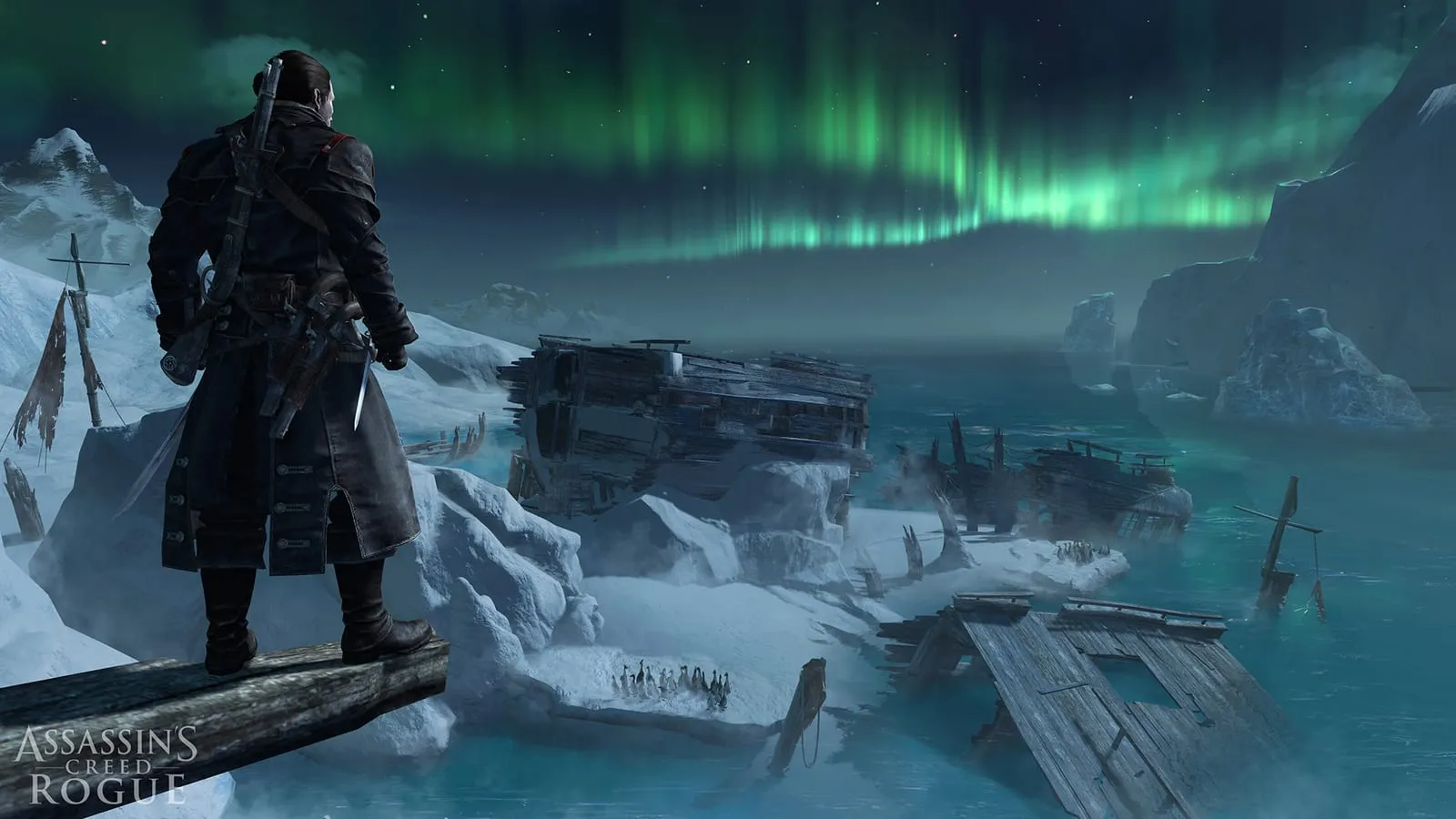
The icey waters of the Northen Atlantic play host to some ferocious naval battles with huge glacial land-masses and roaming ice-bergs setting the scene for what becomes the watery grave of many enemies. In short, I loved the North Atlantic sections of the game, if not just for their gameplay, but for their stunning visual treats, but more on that below.
One thing that does hinder the gameplay is the unstable frame-rate. For the most part the game plays pretty stable, but once you hit the denser areas of the game where a lot of action is happening on-screen it plummets to a slideshow. Thankfully the stutters are few and far between and within Rogue’s equivalent of Assassin’s Creed III’s frontier the frame-rate is steady and doesn’t distract from the gameplay.
I’m not normally a stickler for frame-rates and resolutions (despite Unity’s occasional drops I found it very enjoyable,) but even my tired eyes pick up on it with ease with Rogue. Something to think about if you’re holding out for the PC version, which hopefully gets proper optimisation from Ubisoft.
Graphics
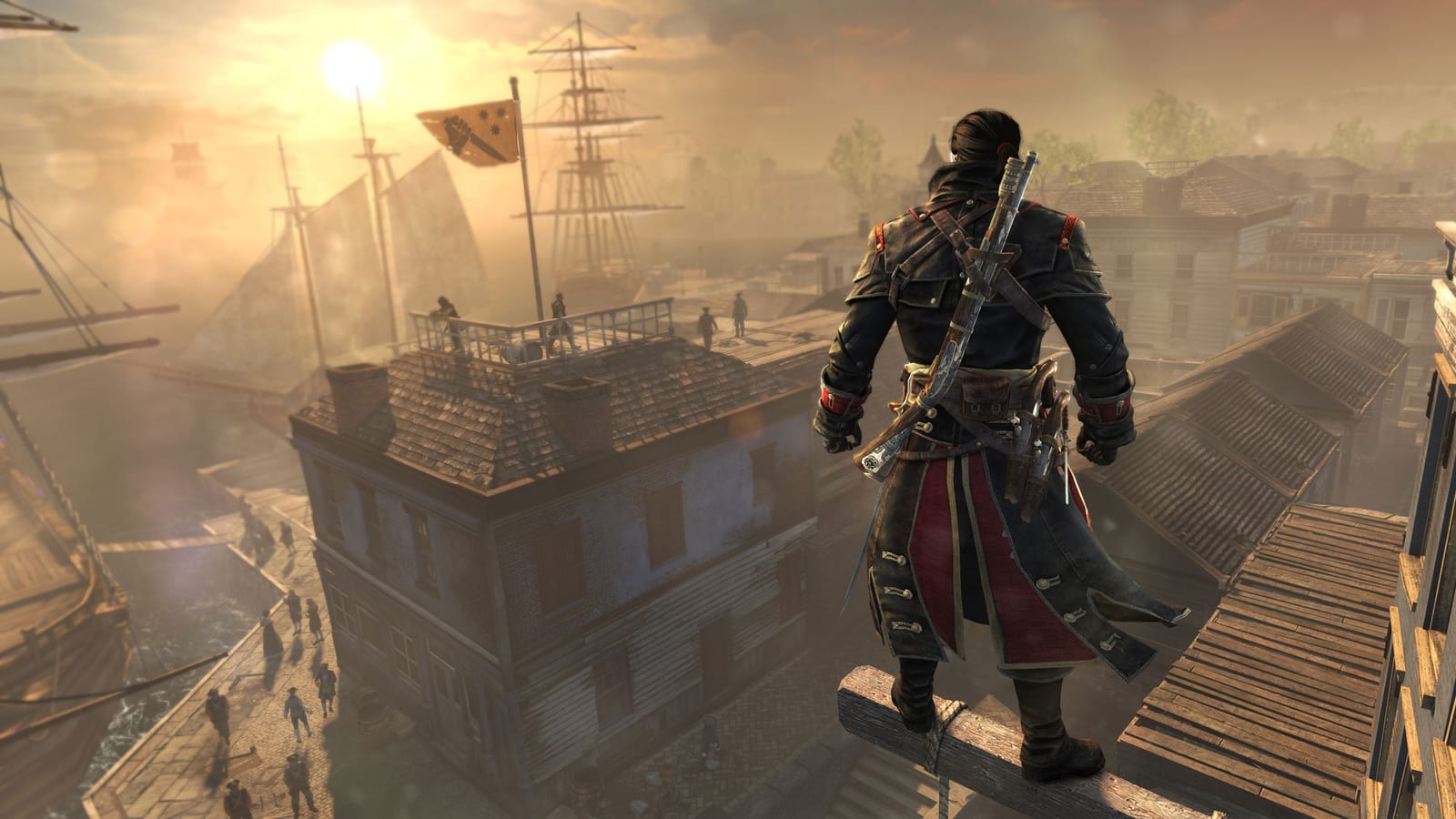
Graphically you’re not looking at a master-piece but instead it’s more of the same. The same engine that powered Black Flag is utilised well and delivers a crisp, fresh look on the world.
Characters are animated superbly with the animations being lifted from Black Flag, which isn’t terribly bad. Black Flag featured some of the best animations within the series so it’s nice to see Ubisoft Sofia haven’t looked to do away with what works well.
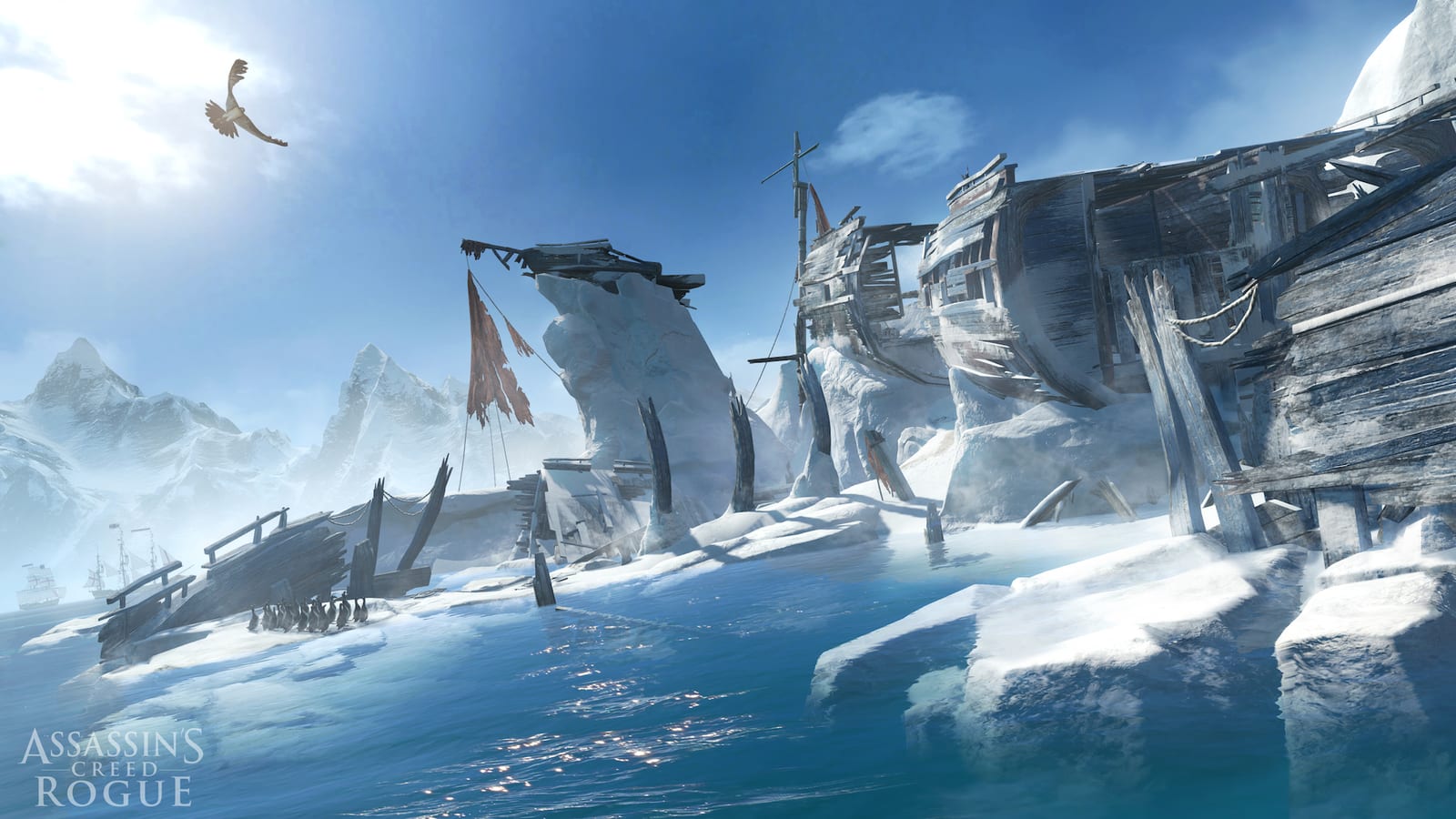
The different locals within Rogue are also a wonder to behold. Granted they look a little low-end compared to it’s next-gen counterpart, but judged on its own merits and giving leave for the platforms it was designed for, the misgivings can be overlooked - to an extent.
One thing I take issue with is the pop-in of characters and object that populate the games world. As was present in Assassin’s Creed: III, New York is plagued not just by rats, thieves and scallies, but also by characters changing their appearance in the blink of an eye. Running through the streets of New York presents a bustling world of character that draws you in and pleases the eye, but as you’re running towards NPC’s they frequently load into the game out of thin air then shift their shape by morphing into other clothes. It was a pain in the neck in Assassin’s Creed: III and it’s a pain in neck here.
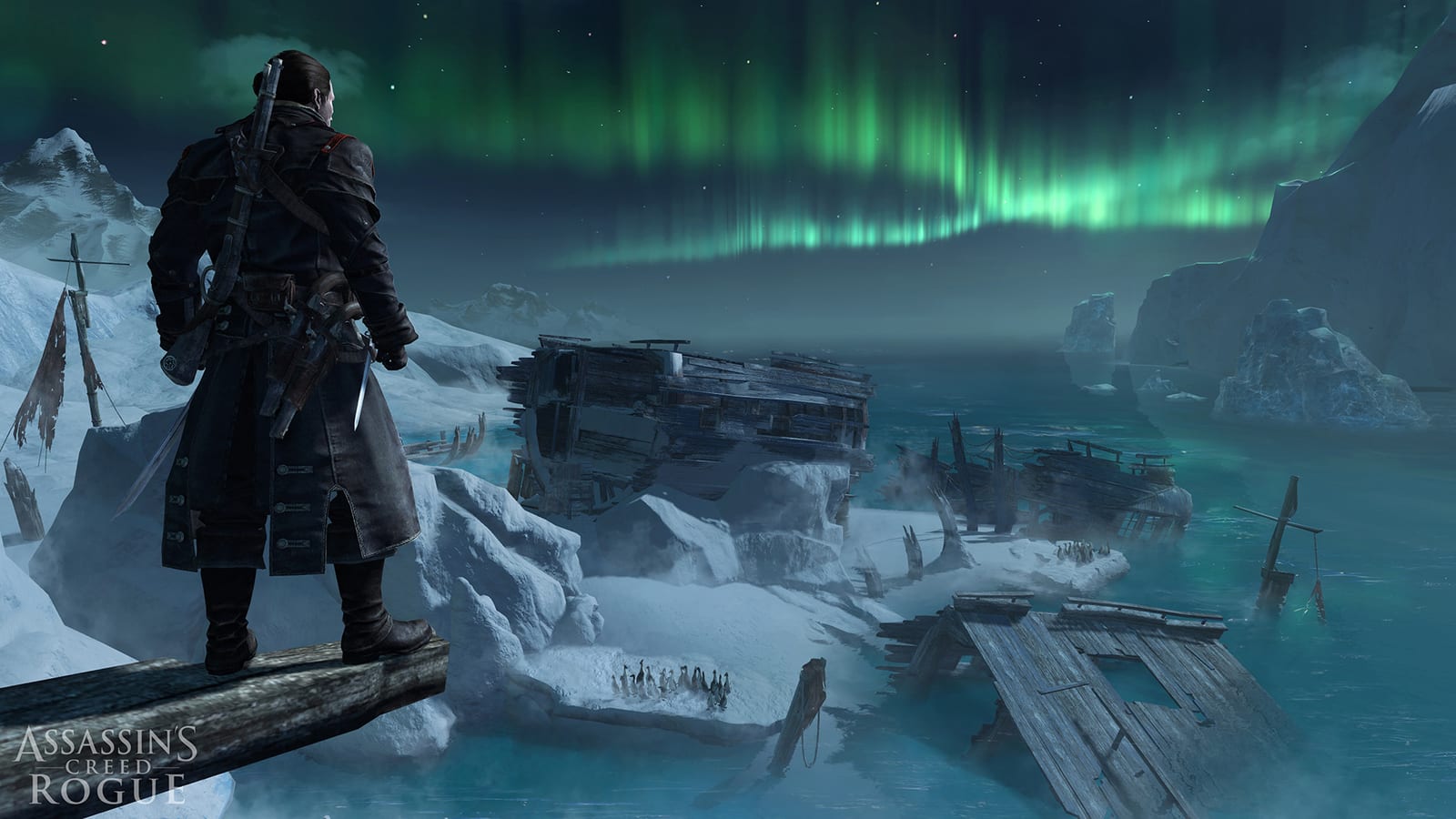
Other than the few complaints the game looks superb and is easily on par with it’s predecessors, even managing to excel in some respects thanks to the intriguing locations offered to players.
Assassin’s Creed: Rogue could have been terrible, it could have been an awful quick cash-in by Ubisoft, but after a few hours of play I soon realised that I was still playing a fully-fledged Assassin’s Creed game. It’s easily one of the most interesting narratives within the series and the fan-service is prevelant.
Assassin’s Creed: Rogue will be available from November 11th for the PS3 and Xbox 360 with a PC release slated for early 2015. You can pre-order your copy from Amazon UK and get the Amazon-exclusive Commander Pack.
This review was conducted on the PS3 with a copy of the game the reviewer procured by himself.
- Story9.0
- Gameplay8.0
- Graphics8.0
- Sound8.5
- Replay Value7.0
Related stories
Star Wars: Knights of the Old Republic 2 - The Sith Lords Review
Star Wars: Knights of the Old Republic 2 - Sith Lords is a certified classic that stands the test of time - mostly. If you want a lengthy RPG with lightsabers, force abilities, and a deep story that expands Star Wars lore, the only better option would be the first game.